Share On:
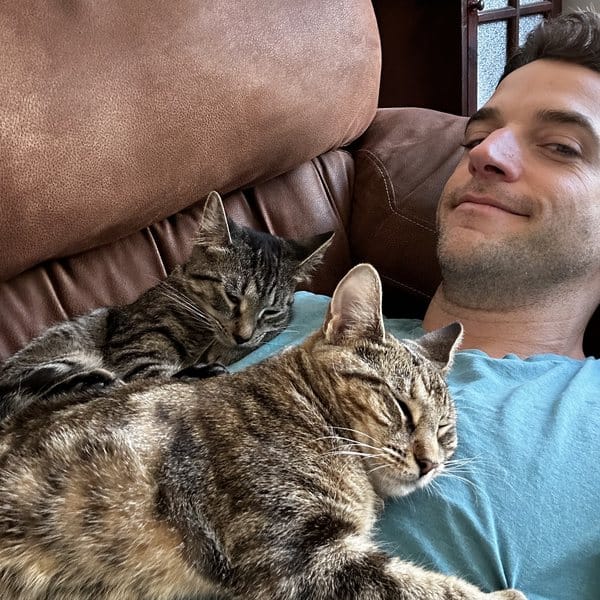
By Chad, cat dad to Fawn and Arya. I’m not a vet. This is the play approach we use at home, with vet sources linked where health comes up.
You bought the wand, the crinkle balls, and the catnip mouse. Your cat sniffed each one, looked at you like you had personally insulted them, and walked away. Now there is a pile of rejected toys in the corner and a small voice in your head asking what is wrong with your cat.
Before you buy anything else, try changing how and when you play. This guide walks through the most likely reasons, a 10-minute experiment to see what actually interests your cat, and when less play deserves a vet conversation instead.

Quick answer
Cats ignore toys for a handful of reasons: how the toy moves, when you offer it, a toy that never goes away, too much going on in the room, or plain individual preference. Start with a quiet room, short sessions, and a toy that moves away from your cat, pauses, and hides. If less play is a change from your cat’s normal, talk to your vet rather than assuming boredom.
Chaddy note: when to call the vet first. If your cat is playing less than usual, suddenly or gradually, and especially alongside changes in jumping, appetite, grooming, or litter box habits, start with your veterinarian. Joint pain often shows up as a subtle drop in activity rather than a limp, and a play experiment cannot rule out pain or illness.
7 reasons your cat might be ignoring toys
These are possibilities, not a diagnosis, and plenty of cats have more than one going on. The first six can usually be tested this week without buying anything.
| Possible reason | What it can look like | First thing to try |
|---|---|---|
| 1. The toy moves like a threat, not prey | Leans back, looks away, walks off | Move the toy away from your cat, never toward them |
| 2. The wrong kind of movement | Ignores flying toys, perks up at floor movement (or the reverse) | Try air, ground, and small twitchy movement |
| 3. The toy never goes away | Ignores the toys that live on the floor | Put most toys away and rotate weekly |
| 4. No catch at the end | Starts playing, then gives up | Let your cat catch the toy, several times |
| 5. Wrong time of day | Ignores midday play, livelier near meals | Play at dawn, dusk, or before a meal |
| 6. Too much going on | Watches intently but never commits | Quiet room, one cat, slower movement |
| 7. Pain, illness, or age | Less activity overall, not just less play | Talk to your vet |
1. The toy moves like a threat, not prey
Real prey flees, darts, hides, and freezes. What it never does is fly straight at a predator’s face. A wand waved in front of your cat or dangled over their head reads more like a threat than a bird, and a sensible animal leans back and declines. The fix is simple: the toy moves away from your cat or across their view, never toward them.
2. It is the wrong kind of movement for your cat
Some cats light up at anything fluttering through the air. Others only care about things scurrying along the floor, or tiny twitchy movement under a blanket. A ground-focused cat can watch a feather wand for years and never care, and everyone concludes the cat “doesn’t play.” Often the cat just has a preference nobody has tested yet.
Chaddy tip: movement preference is one clue to a bigger pattern. Most bored cats lean toward one of four types (Hunter, Velcro, Climber, or Loaf), and each answers to a different kind of play. Take the quiz to find your cat’s type before you buy another toy.
3. The toy never goes away, so it turned into furniture
A toy that lives on the floor 24/7 stops being prey and becomes furniture. Rotation is the free fix: put most of the toys in a bin, leave three or four out, and swap them weekly. A toy that has been out of sight for a couple of weeks often comes back feeling new again.

4. There is no catch at the end
Hunting is a sequence: stalk, chase, catch. If playtime always ends with the toy vanishing mid-chase, your cat gets the effort without the payoff, and some cats stop showing up for a game they always lose. It is the same reason we are cautious about lasers, covered in whether laser pointers are bad for cats.
5. You are playing at the wrong time of day
Cats tend to be most active around dawn and dusk. A session at 1 p.m., in the middle of a deep nap, can flop where the same toy at 7 a.m. or right before dinner gets a real chase. Aim for times your cat is already up and moving.
6. There is too much going on
TV on, dog pacing, another cat watching from the doorway, toy whipping around at top speed. Some cats shut down in that much chaos. If your cat watches the toy intently but never commits, try a quiet room and move the toy less, not more.
7. Pain, illness, or age
Arthritis can make jumping and pouncing hurt, dental pain can make biting a toy unpleasant, and many illnesses show up as lower energy. This is why the vet note above comes before everything else. Older cats still enjoy play, they just usually do better with lower-impact, ground-level versions of it.
A 10-minute play experiment: find out what interests your cat
You do not need to guess which reason fits. One calm, structured session will show you what gets a response. It will not tell you why your cat is less interested, but it gives you real clues to work with.
- Pick the moment. A quiet room, one cat, TV off, at a time your cat is already awake. Right before a meal is ideal.
- Start slow and low. Drag a wand toy along the floor, away from your cat, in short bursts.
- Pause and partly hide it. Freeze the toy for a few seconds, or let just the tip peek out from behind a chair leg.
- Change the movement if your cat stays relaxed. Try a little air time with fluttering and perching, or tiny twitches under a blanket.
- Let them catch it. If your cat engages, allow a few catches. If they disengage, stop. Ending on their terms is fine.
- Write down what happened. Watching, stalking, approaching, batting, chasing, or no interest, and which movement got it.
Watch for the small tells: pupils widening, ears forward, weight shifting to the back legs, the butt wiggle. Watching without chasing still counts as interest. It is a starting point, not a failed session.

What to try next, based on what you saw
Use this as a troubleshooting guide, not a test result. Most cats need a week or two of short sessions before you see a clear pattern.
| What you noticed | What to try next |
|---|---|
| Watched but did not chase | Slow the movement down and add longer pauses |
| Only engaged with floor movement | Stick with ground play instead of switching back to airborne toys |
| Perked up at air movement | Use a wand with flutter and let the toy “land” so they can pounce |
| Started, then quit | Shorter sessions and an easier catch |
| Ignores the familiar toys | Put some away and rotate them weekly |
| More interested in food than toys | Try a puzzle feeder or hide part of a meal |
| Less activity than usual overall | Talk to your vet rather than assuming boredom |
Whatever got a response, build on it with two or three short sessions a day, ending each one with a catch and, ideally, a meal or a few treats. For the full technique, see how to play with your cat. And if your cat only seems to want to play once you are in bed, our guide to cat zoomies at night covers the evening routine.
Keep track of what gets a response. The free Indoor Cat Boredom Fix Kit includes a 7-day play reset and a toy rotation schedule, so you are not starting from a blank page.
If the experiment found a gap: optional tools
These links are affiliate links, so we may earn a small commission at no extra cost to you. You may not need any of them: a wand you already own, used the way the experiment describes, is often enough.
Quick Picks: Tools for Specific Play Gaps
-
If your cat perked up at air movement: GoCat Da Bird
The feathers spin and flutter like a bird in flight. The catch: it is a wand, so it only works with you on the other end. -
If your cat cares more about food than toys: Doc & Phoebe’s Indoor Hunting Cat Feeder
Splits a meal into small “mice” you hide around the house, so dinner becomes the hunt. The catch: it takes a few minutes of setup at each meal. -
If your cat likes to work for treats: Cat Amazing Classic
A cardboard puzzle your cat has to paw treats out of. The catch: some cats need a few easy rounds before they get the idea.

When you are ready to fill a bigger gap, our best cat enrichment toys roundup is organized by the same play types, and the bigger picture lives in our indoor cat boredom guide. Not sure boredom is the issue at all? Compare what you are seeing with the signs of a bored cat.
Frequently Asked Questions
Does watching the toy without chasing mean the session failed?
No. Watching is interest. Many cats stalk with their eyes long before they commit with their body. Slow the toy down, add longer pauses, and give your cat the chance to make the first move.
Do cats get bored of the same toy?
Often, yes. A toy that never leaves the floor can stop feeling like something to hunt. Keep three or four toys out, store the rest, and swap weekly so returning toys feel new again.
How should I adapt play for an older cat?
Keep it low and slow: ground-level movement, short sessions, and easy catches instead of jumping and pouncing. If your older cat is playing less than they used to, check in with your vet, since joint pain often shows up as a drop in activity.
What should I record before I talk to my vet?
Note when you first noticed less play, whether it came on suddenly or gradually, and any changes in jumping, appetite, grooming, sleeping, hiding, or litter box habits. A short phone video of your cat moving around can help too.
My cat only plays at night. Is that normal?
It can be. Cats tend to be most active around dawn and dusk, and many save their energy for when the house is quiet. A play session and meal in the evening can help shift that energy earlier. Our guide to cat zoomies at night has the full routine.
What if my cat only wants to play alone?
Some cats prefer solo play on their own schedule, and that is fine as long as they are getting real activity. Toys they can restart themselves help. Our roundup of the best automatic cat toys covers the ones that hold up to unsupervised play.
Want the whole month mapped out? Once you know what your cat responds to, the Indoor Cat Enrichment Blueprint is my 30-day plan built around your cat’s type, with troubleshooting for when a routine stalls.