
Share On:
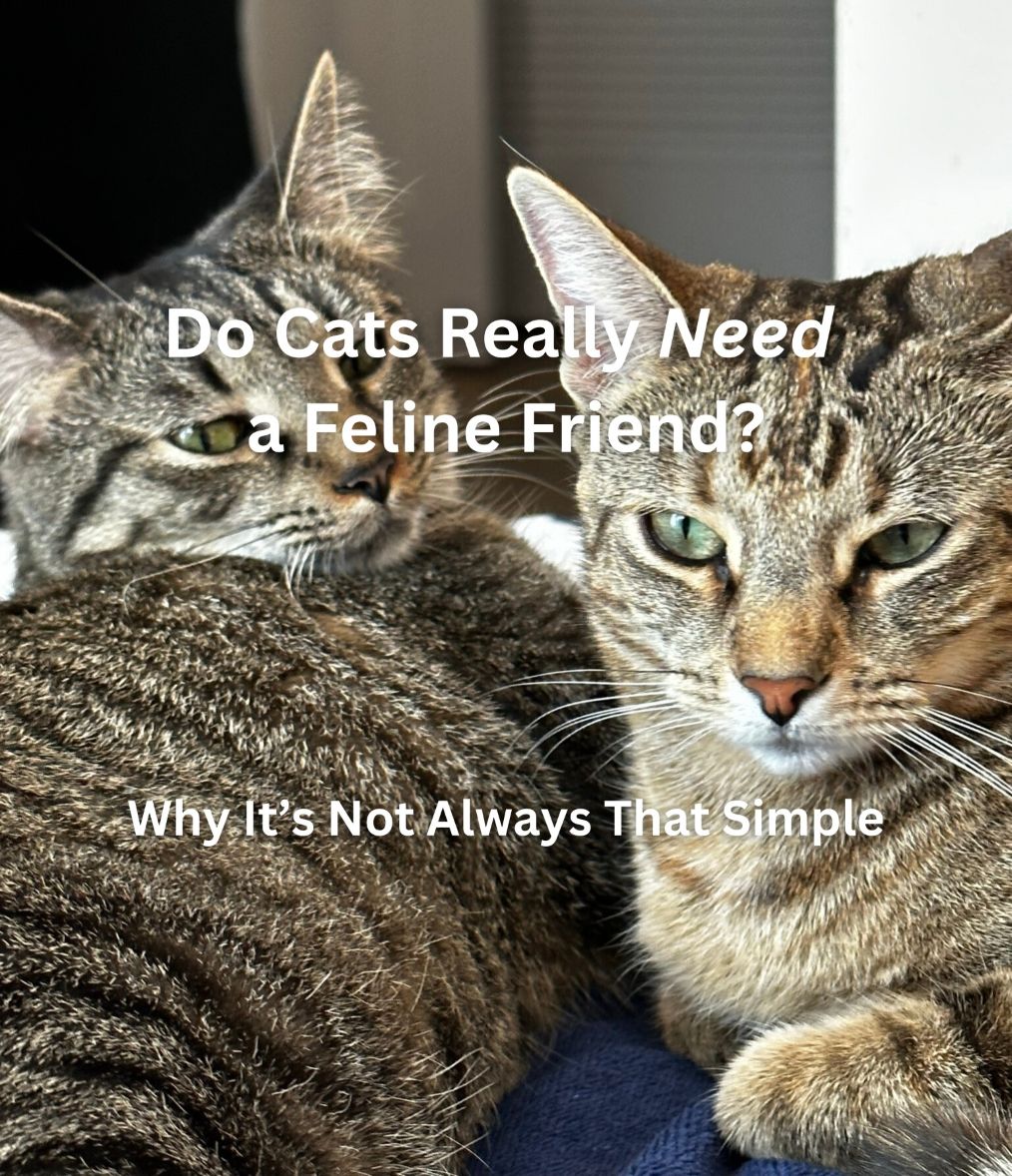
Once upon a time, my two cats were besties. Whether grooming each other or playing, cuddling, or plotting their midnight mischief, they were always together. But then one day, everything changed. My bonded best friends began beefing, suddenly, intensely, and without warning. As it turns out, one of them was hiding a medical issue. Pain had made her irritable and defensive, and her former playmate? Now a perceived threat.

Before this bizarre experience, I had never even heard of non-recognition aggression. But what surprised me most was the revelation that it’s not uncommon in households with multiple cats. This has profoundly impacted my beliefs.
You see, I used to think that two cats are always better than one. But as it turns out, the truth is much more nuanced than that.
Do Cats Need Another Cat?
Quick answer
Not necessarily. Plenty of cats are perfectly happy as the only cat, and forcing a second one on a territorial or older cat can backfire. A companion helps most when your cat is young, social, and under-stimulated, and when you have the space and budget to introduce them slowly. The deciding factor is your individual cat’s temperament, not a blanket rule.
Some cats thrive with a companion. Others become more stressed.
Whether your cat needs another cat depends on personality, energy level, age, and how much enrichment and structured play they already receive at home. Before adopting a second cat, it’s important to carefully evaluate whether the issue is loneliness or boredom.
If you’re unsure, start with a stronger enrichment plan before bringing home another pet. Our full guide on how to fix indoor cat boredom covers exactly what to change. And here’s what actually works to entertain an indoor cat.
Where the “Cats Need Friends” Myth Comes From
There’s a good reason for why many cat guardians think adding a second feline will automatically bring joy and enrichment: it often can. But not always.
The basis for understanding why cats don’t always get along begins with a brief history lesson, a feline origin story, if you will.
Cats Weren’t Built to Be Besties (But it Happens)
“Remembering that the domestic cat (Felis silvestris catus) evolved from an asocial species is essential to understanding feline motivations.” (AAFP)

Unlike pack animals such as dogs, cats are non-obligate social creatures. That means they can enjoy company, but they don’t need it. Every cat is a bit of a solo act, shaped by:
- Genetics
- Early life experiences (especially from 2 to 9 weeks old)
- Their current environment
- How safe and secure they feel in the moment
Some cats thrive in multi-cat homes. Others experience chronic stress, anxiety, or aggression when forced to cohabitate. Especially if they don’t have enough space, resources, or choice.
When a Second Cat Can Help
- Young, high-energy cats
- Cats raised with littermates
- Homes where humans are gone long hours
- Cats who actively seek social interaction
When a Second Cat Can Make Things Worse
- Territorial adult cats
- Cats with a history of anxiety
- Homes without sufficient vertical space
- Situations where boredom is mistaken for loneliness
If boredom is being mistaken for loneliness, adding another cat can create more stress instead of solving the real problem. Before you adopt, make sure you’re already doing enough to entertain your indoor cat each day.

Subtle Signs Your Cat Might Not Want a Roommate
Not all conflict looks like hissing and swatting. Watch for these red flags:
- One cat always hiding, avoiding shared spaces
- Guarding behaviors at food bowls or litter boxes
- “Silent” bullying, staring, blocking pathways
- Over-grooming or stress-related health issues
Many of these can be subtle, so pay close attention to any sudden or drastic shifts in mood or behavior.
The Golden Rule: Resources, Resources, Resources
If you do have multiple cats, the key to a peaceful coexistence is: choice and abundance. Every cat should have:
- Their own litter box (+1 extra for the household)
- Separate food and water stations
- Vertical space to escape or perch safely
- Private places to retreat to and hide
When in doubt, spread things out. Cats strongly prefer not to queue.

What About “Single Cat Syndrome”?
You may have heard the term “single cat syndrome,” used to describe the bratty, hyper, or attention-demanding behavior that can show up in a cat living on its own. Excess energy, rough play, knocking things off the counter, yowling for attention at 3 a.m.: it all gets blamed on the cat being lonely.
Here is the catch. Single cat syndrome is not a medical diagnosis, and it is rarely proof that your cat needs another cat. Far more often it is the signature of an under-stimulated cat, not a lonely one. The same behavior usually fades once the cat gets enough structured daily play and enrichment that actually challenges them. Fix the stimulation first. If the restlessness still does not budge, then a companion becomes worth a serious look.
Is It Better to Have Just One Cat?
Sometimes, yes, less can be more. If your cat is happy, active, and bonded with you, there’s no rule that says they need another of their kind. A peaceful, stable solo home always beats a stressful multi-cat one.

The goal is not to match an idealized image of cat companionship. Rather, it’s to honor the unique needs of the cat you have.
Thinking of Adopting a Second Cat? Read This First
If you’re considering adding another feline to your home, ask yourself:
- Has my current cat shown interest in other cats?
- Are they calm, confident, and adaptable?
- Do I have space to give each cat their own territory?
- Am I prepared for a slow, structured introduction?
Even the friendliest, most social cats need ample time to adjust. Most successful introductions happen gradually over weeks or even months, not days.
Before bringing another cat into your home, it’s worth fixing the root issue first. Many “loneliness” problems are actually boredom in disguise. This indoor cat boredom fix kit walks you through exactly what to change.
When Medical Issues Masquerade as Behavior Problems
Back to our story: when my cats started fighting, I thought they were just “mad” at each other. Turns out, pain and illness can change a cat’s behavior drastically.

If you ever notice sudden aggression or social withdrawal, rule out medical causes first. A vet check might just save the peace in your multi-cat household.
Note: ironically, trips to the vet are also one of the leading causes of non-recognition aggression, according to the IAABC. Take extra precautions both before and after your trip to reduce the likelihood of this happening.
Final Thoughts: Let Your Cat Be the Ultimate Guide
Cats are complex, independent thinkers. And, just like us, each one is a unique individual. Whether or not they want a feline companion depends entirely on their personality, life experience, and environment.
The best cat parenting is personalized. Your cat might thrive with a friend or flourish alone. Either way, your attention, understanding, and willingness to adapt will make all the difference.
Thinking a Second Cat Will Fix the Boredom? Start Here First
Most “bored” cats don’t need a roommate. They need the right kind of engagement, matched to their personality. That’s exactly what The Indoor Cat Enrichment Blueprint is built to figure out, step by step, before you commit to a major introduction project.
It’s live now: 25 pages, $24, with a 30-day refund. See what’s inside the Blueprint.
PsstPsstScript
So, what ultimately happened with my cats? You didn’t think I’d leave you hanging, did you?! Let’s briefly turn our attention back to our besties from the beginning of the post…
After nine brutal weeks of separation, we finally had a breakthrough and were able to slowly reintegrate the cats. It’s hard to express in words how grateful I am for this. Sadly, many similar stories don’t have such a happy ending.

That’s not to say that things are always perfect. My girls still have their moments, and even need to be briefly separated at times. But the important takeaway is that in most instances, it’s possible to find an amicable solution. That’s the good news.
The bad news is that things don’t always work out like they did for us. Furthermore, nothing about this process was easy. It took three to four daily “eat, play, love” sessions for nine weeks and at times, felt like we weren’t making any progress at all.
But as they say, all’s well that ends well. If you’re reading this and going through something similar, I feel your pain. Also, I wish you all the best. Stay patient, stay compassionate, and stay the course. Your cats are depending on you.
Frequently Asked Questions
Are cats happier in pairs?
Some are. Cats raised together from a young age often bond deeply. But many adult cats are territorial and may feel threatened by a new feline. Always assess your cat’s temperament before assuming they want a friend.
Can a single cat be happy alone?
Yes, as long as their environment is enriched. Provide toys, vertical space, interactive play, and daily affection. A solo cat with a bonded human often shows fewer stress signals than one forced to share space with an incompatible housemate.
How can I tell if my cats are actually friends?
Look for mutual grooming, sleeping or resting together, balanced play, and lack of resource guarding.
What are subtle signs my cats aren’t getting along?
Warning signs include one cat always eating last, litter box avoidance, hiding, sudden aggression, blocking access to resources, or overgrooming.
What if my cats used to get along but now fight?
Rule out medical issues first. Pain or illness often triggers behavioral changes. After that, reintroduce them gradually using scent swapping, barriers, and positive reinforcement.
Is it cruel to keep my cat as a solo pet?
Not at all. It’s far crueler to force a social situation that causes chronic stress. Many cats live long, enriched, deeply bonded lives with their humans, and prefer it that way.
Should I get two kittens instead of one?
If you’re starting fresh, yes, two kittens can grow up as a bonded pair, which prevents loneliness and eases the transition into your home. But always ensure you have the resources for two.
4 responses to “Do Cats Really Need a Feline Friend? Why It’s Not Always That Simple”
Very interesting information. Thank you
You are very welcome, Thank you for reading!
4 daily sessions of what?
Ahhh – great question, I see how that’s not entirely clear. So these are essentially what Jackson’ Galaxy calls, “eat, play, love” sessions. In a nutshell, it entails playing with both cats separately, then feeding meals on either side of a closed door. There’s obviously much more to it so I’m going to describe the process in detail in my next post. Make sure you’re subscribed so you don’t miss it!